Jessica Sepel
-
Jessica Sepel started a personal blog about her relationship with food in 2012. Then she built a company valued at over $600 million without taking a single dollar of outside capital.
This is not a story about overnight success. It is a story about what happens when a woman builds from genuine experience, stays connected to her community and refuses to compromise on either.
There was a funding decision that Jessica Sepel made early when building JSHealth that does not get talked about enough. She chose not to raise capital. Not because she could not. But because she understood, with clarity and confidence that most founders only develop in hindsight, what taking outside money might actually cost her in the long term.
That decision shaped everything. The pace of growth. The culture. The product integrity. The fact that a $600 million business still operates with the same values it launched with in 2018.
JSHealth sells one bottle every 20 seconds. It is stocked in over 1,800 retail stores in Australia and more than 1,000 in the UK. Revenue has grown over 1,300% since 2019. The reported valuation sits at $600 million. None of that came with a venture capital round. No celebrity backer. bootstrapping, which Jess will tell you is the hardest yet most clarifying thing she has ever done.
JSHealth Vitamins launched with Jess, her husband Dean Steingold and a community of women who had been reading her blog for years. The early days were not polished. Jess was across product development, customer conversations, content, packing orders. Every dollar had to work.
"The hardest part was probably balancing long-term vision with limited resources. When you bootstrap a business, you have to grow sustainably and make careful decisions at every stage. There isn't unlimited capital to fall back on, so you learn resilience very quickly." Jessica Sepel
What bootstrapping buys you, if you can stay the course, is something no funding round can replicate. You build slowly. You stay connected to your community. You make decisions based on what the business actually needs rather than what your cap table expects.
"Looking back, I'm very grateful for that foundation because it shaped the culture and DNA of JSHealth in such a meaningful way." Jessica Sepel
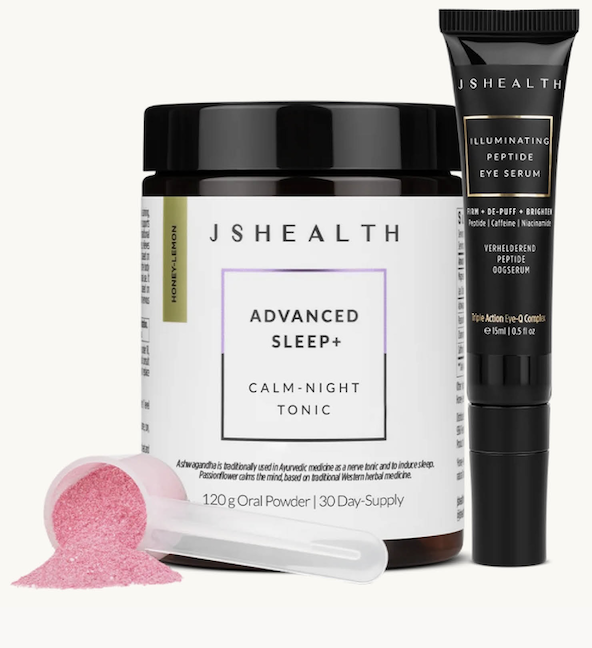
What the numbers articulate in hindsight: the decision to build the product range directly from community demand, not market research, not trend forecasting, is what drove the retention that underpins the valuation. The formula names reflect the health goal. The simplicity was intentional. Women were telling Jess what they needed: help with hair, sleep, stress, skin, digestion and she built exactly that. No more, no less.
That discipline, in a supplement industry full of noise, is what made JSHealth commercially distinct.
"You do not need to have everything figured out before you begin. So many women hold themselves back waiting to feel fully ready, fully qualified or fully confident, but clarity often comes through action." Jessica Sepel
Why this matters for the F5 community
JSHealth did not need F5 Collective. But the next JSHealth might.
Most women-owned and led businesses at the JSHealth stage - established, revenue-generating, clear community demand - sit in what F5 calls the Missing Middle. The gap between microfinance and venture capital where the traditional funding system wasn't designed to reach them. Jess cleared that gap on her own terms. Not every founder will have that runway.
What businesses like this need is not just capital. It is access to customers, distribution and infrastructure that compounds over time. That is what F5 Collective was built to provide.
Jess is proof that a business built on real experience, honest communication and a clearly defined community can scale without compromising either. The $600 million valuation is not the story. The discipline of how she got there is.
Shop F5 Collective’s Picks